
In Reference To... The Dewey Decimal System
- Jul 8, 2025
- 10 min read

Introduction
Readers, I am older than Google.
It was officially launched in 1998 by Larry Page and Sergey Brin to market Google Search, which has become the most used web-based search engine. Technically, the search algorithm was first developed in 1996. That was known as "BackRub."
Google is a much better name. And Google has allowed us humans to open up our world to knowledge.
But how did scholars and curious readers search for this knowledge before the Google?
In libraries, at least, the organization was done by the deep-rooted, the enduring, the organized ✨Dewey Decimal System✨
Even with Google and other preferred search engines on the internet, the Dewey Decimal System is an essential tool for every writer to keep in their back pocket. How much do you know about it? Why is it still used? And how can you use it for your own writing?
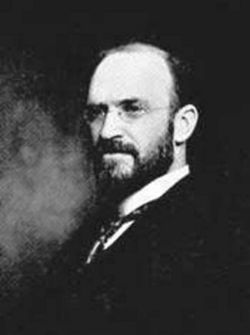
Origins: Who Was Dewey, and Why Decimal?
I'm always one to say that people have their own timelines. Success can be found at any age. For Melvil Dewey, his time to shine was at the unweathered age of 25. According to his Wikipedia page, "he attended rural schools and determined early on that his destiny was to reform the education of the masses."
What a guy. Just wanting to watch the world learn. Outside of the Dewey Decimal System, check out his other accomplishments:
He founded the Library Bureau, which sold high-quality index-cards and filing-cabinets, and established the standard dimensions for catalog cards.
He advocated spelling reform; he changed his name from the usual "Melville" to "Melvil", without redundant letters, and for a time changed his surname to "Dui."
From 1883 to 1888 he was chief librarian at the Columbia College Libraries.
During his time as director of the New York State Library (1888–1906), Dewey established a program of traveling libraries.
From 1888 to 1900, he served as secretary and executive officer of the University of the State of New York.
Dewey became a member of the American Library Association's Hall of Fame in 1951.
Back to the decimals: Dewey had a plan.
After earning his undergrad at Amherst College, Dewey was hired to manage Amherst's library and reclassify its collections. He worked out a new scheme that superimposed a system of decimal numbers on a structure of knowledge first outlined by Sir Francis Bacon. He may have also found inspiration from the card system of Italian publisher Natale Battezzati as he's cited in Dewey's pamphlet prefaces as "the most fruitful source of ideas."
You know how calming it is to walk through the shelves of a library? This system was created at a time when patrons of a library weren't allowed to browse through the shelves unless you were a most privileged (read: wealthy) patron. In fact, most American libraries at the time organized books based on the height of the book and when it was acquired.
Come on. What a silly way to go about it. You mean that a book about dinosaurs would be right next to a book about philosophy if they were the same size and acquired at a similar time? And the dinosaur book may be next to a completely different book at a different library because they got a philosophy book later on?
The big innovation of the Dewey Decimal System was to position books on the shelves in relation to other books on similar topics. This was excellent for a movement toward open access for patrons. It was much easier for folk to find the books this way.
How It Works
It may seem complicated at first, but, I promise you, there's a basic structure to it all.
The numbers of a book land between 000 and 999. Each hundred is separated into ten (10) broad categories of knowledge:
000s – General Knowledge (encyclopedias, information, newspapers, periodicals, computer science)
100s – Philosophy & Psychology
200s – Religion
300s – Social Sciences (politics, law, education, anthropology, )
400s – Language
500s – Science
600s – Technology, Medicine
700s – Arts & Recreation
800s – Literature (rhetoric, prose, poetry, drama)
900s – History & Geography
And then the books go into further decimal expansions. For example:
500 = Natural Sciences
510 = Math
516 = Geometry
516.3 = Analytic Geometry
Each book gets a number + cutter code (for the author/title) to determine shelf order. The deeper into the decimals you go, the more specific things get. For example, at the University of Illinois' Library, here are all the subjects that fit into Class 700 - Arts and Recreation:
700 The arts
701 Philosophy & theory
702 Miscellany 703 Dictionaries & encyclopedias
704 Special topics
705 Serial publications
706 Organizations & management
707 Education, research, related topics
708 Galleries, museums, private collections
709 Historical, areas, persons treatment
710 Civic & landscape art
711 Area planning (Civic art)
712 Landscape architecture
713 Landscape architecture of trafficways
714 Water features
715 Woody plants
716 Herbaceous plants
717 Structures
718 Landscape design of cemeteries
719 Natural landscapes
720 Architecture
721 Architectural structure
722 Architecture to circa 300
723 Architecture from circa 300 to 1399
724 Architecture from 1400
725 Public structures
726 Buildings for religious purposes
727 Buildings for education & research
728 Residential & related buildings
729 Design & decoration
730 Plastic arts Sculpture
731 Processes, forms, subjects of sculpture
732 Sculpture to circa 500
733 Greek, Etruscan, Roman sculpture
734 Sculpture from circa 500 to 1399
735 Sculpture from 1400
736 Carving & carvings
737 Numismatics & sigillography (I looked this up and Numismatics is the study of coins and other forms of currency, while Sigillography is the study of seals, particularly those used on documents. ✨The More you Know✨)
738 Ceramic arts
739 Art metalwork
740 Drawing & decorative arts
741 Drawing & drawings
742 Perspective
743 Drawing & drawings by subject
744 Not assigned or no longer used
745 Decorative arts
746 Textile arts
747 Interior decoration
748 Glass
749 Furniture & accessories
750 Painting & paintings
751 Techniques, equipment, forms
752 Color
753 Symbolism, allegory, mythology, legend
754 Genre paintings
755 Religion & religious symbolism
756 Not assigned or no longer used
757 Human figures & their parts
758 Other subjects
759 Historical, areas, persons treatment
760 Graphic arts Printmaking & prints
761 Relief processes (Block printing)
762 Not assigned or no longer used
763 Lithographic (Planographic) processes
764 Chromolithography & serigraphy
765 Metal engraving
766 Mezzotinting & related processes
767 Etching & drypoint
768 Not assigned or no longer used
769 Prints
770 Photography & photographs
771 Techniques, equipment, materials
772 Metallic salt processes
773 Pigment processes of printing
774 Holography
775 Not assigned or no longer used
776 Not assigned or no longer used
777 Not assigned or no longer used
778 Fields & kinds of photography
779 Photographs
780 Music
781 General principles & musical forms
782 Vocal music
783 Music for single voices or the voice
784 Instruments & Instrumental ensembles
785 Chamber music
786 Keyboard & other instruments
787 Stringed instruments (Chordophones)
788 Wind instruments (Aerophones)
789 Not assigned or no longer used
790 Recreational & performing arts
791 Public performances
792 Stage presentations
793 Indoor games & amusements
794 Indoor games of skill
795 Games of chance
796 Athletic & outdoor sports & games
797 Aquatic & air sports
798 Equestrian sports & animal racing
799 Fishing, hunting, shooting
And it goes deeper! But this is a blog post, not a dissertation—which would fall into the 384 class representing higher education and 378.1662 specifying dissertations. Are you seeing how this works now?
Tricks for Reading the Numbers
Outside of becoming a librarian or library sciences volunteer, how can somebody learn the system for their researching purposes?
Mnemonics can come into play! I'm working on memorizing the following:
Great People Read Smart Library Sections To Access Lots of History
G = General works (000)
P = Philosophy & Psychology (100)
R = Religion (200)
S = Social Sciences (300)
L = Language (400)
S = Science (500)
T = Technology (600)
A = Arts & Recreation (700)
L = Literature (800)
H = History & Geography (900)
I wish I could offer an easier trick, but the long and the short of it is that practice is what's required. For visual learners, LibraryThing.com offers a great visual representation of how things are broken down from the larger categories into the detailed niche topics.

I highly recommend putzing around with the very helpful tool. You'll be able to learn neat niches you wouldn't otherwise have found. Think big about what you want to know, and then whittle it down from there. Trouble shooting is encouraged!
Subject: Dinosaurs
That's probably science right? Yeah, Class 500
And out of those choices, Biology fits dinosaurs best. Or...no wait, "fossils and prehistoric life."
Out of all the fossil examples, they're cold blooded vertebrates
At this level of 567, I've found the gamut on "Dinosaurs," as in ancient animals. But what if I wanted to learn about a specific reptilian type?
567.9 it is!
I can search by family. I can search by land or sea types. I can get down to the very Apatosaurus I was thinking about.
And, through this process, I found a great book: Apatosaurus (True Books: Dinosaurs) by Elaine Landau
Subject: Tasseomancy/Tasseography (Tea Leaf Reading)
That's divination. So maybe religion? I went to "Religion > Other Religions > Religions not provided for elsewhere > Religions of other origin > Modern revivals or witchcraft and paganism" 299.4 for pagan practices, but no dice.
Maybe...Philosophy and Psychology? (1)
Oh definitely, there's "Parapsychology and Occultism" (13)
And in that, "Specific topics in Parapsychology and Occultism" (133)
And just like Professor Sybill Patricia Trelawney, I'm looking for the Divinatory Arts. (133.3)
Lo and behold, we have "Fortune-telling by crystals and stones; dowsing; fortune-telling by cards, tea leaves and coffee grounds, oracles and sibyls" (133.32)
No specific enough! We must tack on those decimal places and go to "Fortune-telling by cards, tea leaves and coffee grounds, oracles and sibyls" (133.324)
You know what I'm going to say: More!
It was a fun journey to the end where I ultimately land on 133.3244 "Fortune-telling by tea leaves and coffee grounds"
And find Reading Tea Leaves (The Modern Mystic Library) by A Highland Seer
And you'll also find a great book using this process!
(But also consider volunteering at your library)

Why It's Still Around (Nearly 150 Years Later!)
Many systems have tried to replace ol' Dewey. I'm looking at you, Library of Congress Classification. But the thing is, The Dewey Decimal System is scalable, offering space to new ideas within those decimals. It's intuitive and familiar and can be universally applied—especially when technology isn't available. The system not only remains dominant in public libraries, it is also used in 135 countries!
Nothing is perfect, there are existing critiques about ethnocentrism, outdated categories, and lack of inclusivity, but many libraries now adapt it with modernized overlays or signage.
Dewey in Pop Culture
If you're at the library, subjects regarding Pop Culture are primarily categorized under 300 - Social Sciences, specifically within 302 Social Interaction (which includes mass culture and popular culture) and 306 Culture and institutions, with further subdivisions depending on the specific aspect of pop culture.
If you're not at the library and just looking for media with mentions of the Dewey Decimal in Pop Culture, may I direct you to the following:
UHF (1989): Weird Al works at a public access station. There is a very meta advertisement for a show called "Conan the Librarian" where, after a patron asks where he can find a book on Astronomy, he lifts the guy into the air and menacingly asks: "Don't you know the Dewey Decimal System?"
In Seinfeld Season 3, Episode 5 ("The Library"), Jerry gets a notice about an overdue book from 1971. He thinks he's being punked on a radio station but, ultimately has to visit the library. While walking in, Kramer says, "The Dewey Decimal System, what a scam that was. Boy that Dewey guy really cleaned up on that deal."
Party Girl (1995) is about a 20-something, irresponsible party girl who is bailed out of jail by her librarian godmother. To repay the loan, she starts working at the library and gradually turns her life around. The Dewey Decimal System is a recurring motif of the movie. Watch for yourself on YouTube!
9:19: When Mary is hired as a library clerk she is sarcastically asked by another clerk, "I assume you're familiar with the Dewey Decimal System?"
30:07: Judy, her godmother, chastises her saying, "I know it is not your life's work. But for your information, Freud's study of Dora is not a biography. It is the cornerstone of his psychoanalysis--that is psychology dear. The psychology section is, for your information, in the 100s. Along with philosophy and logic. It amazes me how you can come here every day and absorb no knowlede of the system. A trained monkey learned this system on PBS in a matter of hours. Recode it."
36:00: Librarans rejoice! There is a literal montage about Mary learning, practicing, and executing the Dewey Decimal System. It's worth noting that she's learning from the Dewey Decimal Classification (DCC) 20. Now, in the year 2025, we're up the a DDC 23!
41:50: Mary even gets protective over the system! She sees a guy putting away a book all willy nilly. "I guess you didn't know we had a system in putting books away here. Now I'm curious. You were just randomly putting that book on the shelf, is that it? You've just given us a reat idea. I mean, why are we wasting our time with the Dewey Decimal System when your system is so much easier? Much easier! We'll just put the books everywhere! You hear that everybody? Our friend here has given us a geat idea. We'll just put the books any damn place we choose! We don't care, right? Isn't that right?"
She's then told to go on break.
55:30: Mary is also such a good friend that she organizes the records of her DJ friend, Leo, by the DDC. "They're organized by the Dewey Decimal System, which s perfect for small collections like yours. Unlike the Library of Congress."
She then teaches him the system!
Quiz! "If My Personality Were a Dewey Number…"
In Conclusion!
Turns out, reference isn’t just where we go to find something — it’s also how we decide what knowledge is worth shelving. And humans, lovable humans, just need to organize things to understand how the world works.
So, next time you're at the library, thank "Melvil Dui" for setting up your writing research for success!
Now identifying as 808.042 (Literature > rhetoric & criticism > Rhetoric and collections of literary texts from more than two literatures > Rhetoric and anthologies > Handbooks for writers > English),
Katherine Arkady


Comments