
In Reference to... "Gaslight" and Gaslighting
- Apr 14
- 6 min read

Introduction
Gaslighting is an insidious form of manipulation and psychological control. Victims of gaslighting are deliberately and systematically fed false information that leads them to question what they know to be true, often about themselves. They may end up doubting their memory, their perception, and even their sanity. Over time, a gaslighter’s manipulations can grow more complex and potent, making it increasingly difficult for the victim to see the truth.
Okay but why isn't it called covert manipulation, brainwashing, or, I don't know...psychological warfare?
Because of the movies :)
Are you familiar with the movie Gaslight? It was released in 1944 and psychology hasn't been the same since.
How is a movie so influential? How did it change how the public views mental health? And why did Jack/John/Gregory have to flirt with poor little Angela Lansbury (as Nancy Oliver) like that?
The Table of Contents
The Writer and His Play
Patrick Hamilton's Victorian thriller play, Gas Light premiered at the Richmond Theater of London on the fifth of December 1938. You may know Patrick Hamilton from his 13 novels or 10 stage plays or, as it was hella popular during the time: 10 Radio Plays.
He didn't really like the deck of cards he was dealt in life. He, as they say, "went through it," with recovering from a drunk driving accident in which he was dragged and disfigured by a car. Let's not even start with the influenced his father and mother cursed him with.
As we writers know, getting our feelings out through writing is the way to heal. Patrick really painted a scene of contempt for motorcars in Mr. Stimpson and Mr. Gorse (1953). He did similar processing with Hangover Square (1941). It deals with both alcohol-drinking practices of the time and the underlying political context like the rise of fascism and responses to it.

So with Gas Light, Patrick Hamilton was keen on getting a message across. He struggled with periods of depression and social anxiety, often feeling alienated from society. Some biographers link this to the bleakness and claustrophobia of his plays. As opposed to his other stories, the MC of Gas Light is a woman. Making Bella/Paula the protagonist lets the audience experience the manipulation and self-doubt up close, which makes the suspense stronger. Her position as a woman in that era adds vulnerability and highlights the power imbalance in her marriage.
Sandgate Theatre has their rendition of the stage play available in two parts on YouTube. Here's a link to the first.
The First Movie
We're being gaslit ourselves with the near destruction of a near identical British movie that creators tried to remove from this physical realm. I'm talking about Angel Street, premiered in 1940. This film adheres closer to the original play than the 1944 MGM remake does.
When MGM remade the film with Charles Boyer and Ingrid Bergman, the studio attempted to have all prints of this earlier version destroyed. Fortunately, several prints escaped the fire (in fact, it is believed that director Thorold Dickinson surreptitiously struck a print himself before the negative was lost).
You can watch Angel Street/Gaslight on YouTube.


The "Original" Movie
Gaslight is a 1944 film directed by George Cukor. IMDb user Jwelch5742 gives a summary:
After the death of her famous opera-singing aunt, Paula Alquist (Ingrid Bergman) is sent to study in Italy to become a great opera singer as well. While there, she falls in love with charming Gregory Anton (Charles Boyer). After the two return to London, Paula begins to notice strange goings-on: missing pictures, strange footsteps in the night, and gaslights that dim without being touched. As she fights to retain her sanity, her new husband's intentions come into question.
I'll watch anything with the incomparable Ingrid Bergman of Casablanca, Notorious, Spellbound, Murder on the Orient Express (1974), AND For Whom the Bell Tolls fame.
Fun fact, this was Angela Lansbury's first film role!
You can watch the movie on Internet Archive.
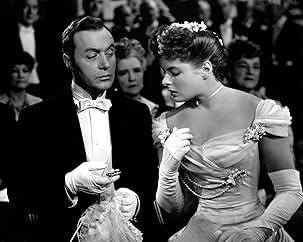


Media Meets Psychology
Rome wasn't built in a day and abusers don't trick their victims like a one and done. Gaslight did an excellent job in showing how little itty bitty manipulations reach macro-unfortunate results.
When the play moved to film and television, this depiction reached a wider audience, embedding the idea of emotional manipulation into popular culture. A work of entertainment became a lens through which people could understand—and name—the insidious ways minds can be twisted. It became more commonly known and what a gift that is for mental health and survivors of DV.
The term “gaslighting” started appearing in articles, advice columns, and early psychological literature by the 1960s to describe similar emotional abuse in real life. For example, in the 1969 book The Gaslight Phenomenon: A Study in Psychiatric Abuse therapists used the term to describe manipulative partners who systematically undermined their spouse’s perception of reality.
In short:
Hamilton’s play gave the concept,
the Hollywood film gave it mass visibility,
and psychologists and social commentators picked up the language
That's why "gaslight" sticks!
How Does One Know That It Is Gaslighting?
DARVO
It was coined by Jennifer Joy Freyd in a 1997 paper titled Violations of power, adaptive blindness, and betrayal trauma theory. (Feminism & Psychology, 7, 22-32.) and has since been peer-reviewed many times.
And it's been word-widely accepted. According to Respect Victoria, the dedicated organization for the prevention of family violence and violence against women in Victoria, Australia:
DARVO stands for Deny, Attack, Reverse Victim Offender. It’s a series of actions used by a perpetrator as a defense mechanism when their unkind behavior is questioned or called out. It works to confuse you and your sense of reality.
Deny
Denying your memory or perception of an event is gaslighting.
They could be denying an agreement, or a conversation, or even something physical – like hitting you.
Denying doesn’t always mean outright saying something never happened. It can also look like creating a story to explain their actions. In the example of denying a physical attack, for example, they might say something like: “Of course I didn’t hit you on purpose, you were about to hit me, so I put my hands out in defense,” – when in reality, you hadn't moved at all.
Attack
After denial comes the attack that tries to break down your credibility. The abuser might go on the offensive about your motivation for questioning them, your mental health (“you’re crazy!”), your parenting ability, your intelligence, etc. Anything that fuels the voice in your head that says maybe they are right, and you are wrong.
They may also add extra lies like, “This is why your family doesn’t like you,” or “Everyone agrees with me on this,” which are designed to also isolate you from your friends and family. (And raise my blood pressure)
Reverse Victim Offender
Next comes blame shifting. This is where the perpetrator manages to make you out as the one at fault. They try to make you feel bad for bringing it up in the first place, or say that it was only because of something you did first.

Response to Gaslighting
Recognizing what is going on with DARVO is Step One. The Next Step is to trust your own perception. Keep a record of events, lean on supportive friends or professionals, and set clear boundaries with the abuser.
Techniques like Grey Rock Method (responding in neutral, unemotional ways) can help reduce conflict and limit the manipulator’s power, while you focus on protecting your mental health and reclaiming control over your reality.
Remember, you don’t have to convince the abuser or win an argument; your goal is self-preservation and clarity. Over time, consistently validating your own experiences and limiting engagement can weaken the manipulator’s influence and help you regain confidence in your own judgment.
Disclaimer: I’m not a mental health professional—just a writer sharing research and insights. If you’re dealing with emotional abuse or gaslighting, consider reaching out to a qualified therapist or support organization for guidance.
Conclusion
Patrick Hamilton probably never imagined that his 1938 play Gas Light would do more than thrill audiences with suspense, but it did something far bigger. What writers always dream of, right?
All the forms of Gas Light media that Patrick Hamilton had a hand in gave audiences a language to describe experiences that were often invisible or dismissed. Seeds were planted for psychologists, journalists, and everyday people to identify and discuss the behavior. In that sense, media has been more than a mirror. It has become a bridge for awareness, understanding, and, ultimately, empowerment.
Have you heard about that gaslighting story? No you didn't.
Katherine Arkady


Comments